by Sal Prothero | 07, Jun, 2021 | Recipes
Serves: 2 or 3, six or seven patties as a meal
Serves: Five, four patties as a snack
Prep time: five minutes
Cook time: 25 minutes
This recipe was inspired by Egyptian falafel, and the Indian pakora, both of which are usually deep fried. This healthier version is baked instead. It is made with lots of veggies and chick pea flour so it is gluten free. Eat the patties dry or pair them with a pesto.
Ingredients
Olive oil spray for pan
2 tablespoons extra-virgin olive oil
1 sweet potato, roughly chopped.
½ cauliflower head, roughly chopped
1 medium onion, thinly sliced
1 teaspoon grated fresh ginger
1 cup chopped spinach
¼ cup chopped coriander
½ teaspoon ground turmeric
½ teaspoon cumin seeds
1 teaspoon sea salt or pink Himalayan salt
½ teaspoon sumac
1 ½ cups chickpea flour
¼ cup filtered water
Method
Preheat oven to 220 degrees C (fan forced).
Lightly spray a baking sheet with olive oil.
Place 2 tablespoons of olive oil, the sweet potato, cauliflower, onion, fresh ginger, spinach, coriander, ground turmeric, cumin seeds, salt, sumac and chickpea flour in the bowl of a food processor. Pulse until well mixed, but still slightly chunky.
If the mix looks too dry. Add ¼ cup of water and pulse again. If it’s still too dry, add another ¼ cup water and pulse.
Using a tablespoon, scoop out 20 portions, form into patties and place on the greased baking sheet.
Bake for 10 minutes. Then use a spatula to flip over the patties. Spray with avocado oil or brush each piece with more olive oil and bake another 15 minutes until golden brown.
Let cool on the sheet tray for five minutes before eating. Store the leftover patties in a container with a lid in the refrigerator for up to two weeks, or in the freezer for up to two months.
If serving as a meal, accompany with appropriate vegetables as a side dish.
(Recipe from Health Coach Hazel)
Tags
[tags_all_in_one number=”20″ smallest=”11″ largest=”11″ unit=”px” separator=” ” orderby=”name” order=”asc” post=”true”]
by Sal Prothero | 02, Dec, 2020 | Recipes
1 red onion, diced
1 red, 1 yellow capsicum diced
3 cloves of garlic, crushed
1 – 2 tsp chilli flakes
1 tsp ground coriander
1 tsp ground cumin
1 tsp dried oregano
1/4 tsp cayenne pepper
1 tin diced tomatoes
1 tin kidney beans, drained + rinsed
1 tin black beans, drained + rinsed
1 large tin of sweetcorn, drained + rinsed
1 cup fresh coriander
juice of a fresh lime
Brown rice to serve
Method
Saute the onion in a little olive oil for 5 minutes. Add the capsicums, garlic, chilli, cayenne, ground coriander, cumin, oregano and cook for 10 minutes. Stir in tomatoes, corn and all the beans. Lower heat and simmer for 30 minutes. If it gets too dry, add a little water. Season with salt and pepper.
Just before serving, stir in the fresh coriander and leave some on the side to add on top. Serve with brown rice, guacamole and sour cream.
Cashew Cream (substitute for sour cream): soak a cup of cashews for a few hours before you prepare this recipe. Drain and pop them in a food processor with approx 1/2 cup water, juice of 2 lemons and salt and pepper. Blend until smooth.
by Sal Prothero | 13, Nov, 2020 | Blog
The World Health Organisation defines mental health as “a state of wellbeing in which every individual realizes his or her own potential, can cope with the normal stresses of life, can work productively and fruitfully, and is able to make a contribution to her or his community.”
For many people, their state of wellbeing has been thrown into question during the pandemic of 2020. For some, there have been many positives that have emerged from the pandemic, for example, learning to slow down and be more present. For others, there have been many negatives, for example, losing their job, losing a loved one, living on their own with little social connection.
The statistics show that one month post Covid-19, anxiety had increased by 63%, depression 50% and stress 64% in the Australian population.
Personally, I really enjoyed a different way of life at first but towards the end of the strict second lockdown, I was starting to suffer from anxiety and stress. This is what urged me to write this blog. Many people I met at that time were feeling the same but we were getting through it by thinking of the positive aspects. Maybe it’s too early for PTSD but many people could be affected in years to come. Many symptoms of PTSD overlap with severe stress. Here are some of the most common symptoms of severe stress:
• Headaches
• Sleep disturbances (insomnia or nightmares)
• Gastrointestinal problems
• Dramatically fluctuating body weight
• Disordered eating
• Difficulty coping with relationships or work
You can’t control the pandemic but you can strengthen your resilience to deal with it, both physically and psychologically. Simple changes to diet and lifestyle can have a significant impact on potentially reversing symptoms of stress and help you to regain control of your life – promoting peace of mind and vibrant energy, supporting sound sleep and an effective stress response, nourishing your nervous system and happy hormones and optimising gut-brain function.
Therefore, symptoms and conditions associated with anxiety, depression and traumatic stress can be improved by using a combination of multi-targeted nutrients that modulate the neuroendocrine and central nervous system (CNS) and neurotransmitters, down-regulate the immune system and neuroinflammation and regulate the hypothalamic-pituitary-adrenal (HPA) axis.
We can usually increase our resilience through social connections, meaning and purpose but if that’s not available, our resilience is reduced. Multi-targeted nutrients can make a big difference, as well as changes to your diet. If diet changes seem too huge a challenge right now, multi-targeted nutrients can definitely help get you on the right path to resilience.
Some nutrients involved in the above are magnesium, B vitamins, Vitamin C, zinc, turmeric, saffron, along with many combinations of nutrients to suit specific symptoms. Only personalized advice can help you determine which is suited for you.
If you need help and would like a chat, you can book a free 20 minute call here. Or you can drop me a line at sal@saltheutritionist.com.au. If you know someone who is struggling, I would love you to share. Thank you!
Tags
[tags_all_in_one number=”20″ smallest=”11″ largest=”11″ unit=”px” separator=” ” orderby=”name” order=”asc” post=”true”]
by Sal Prothero | 12, Nov, 2020 | Recipes
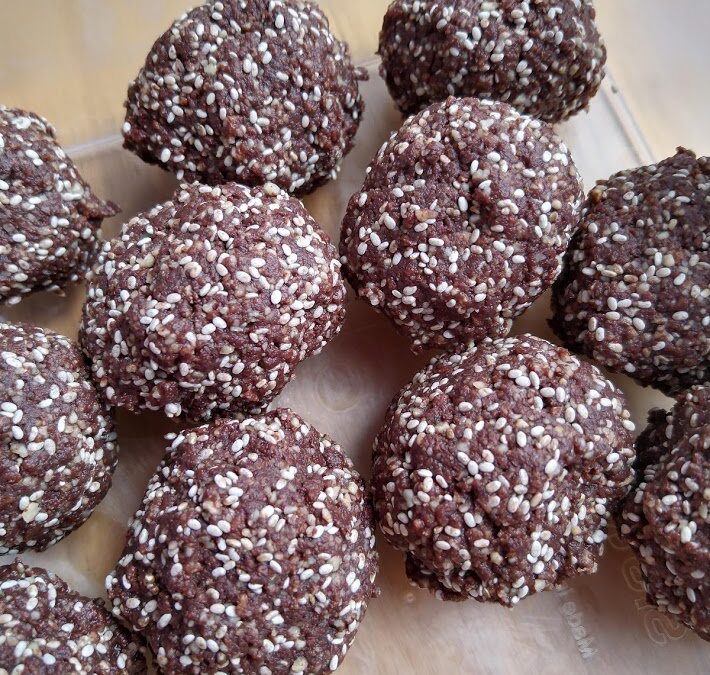
150g (1 cup) ground mixed seeds
20g (2 tablespoons) chia seeds
80g (1 cup) desiccated coconut
30g (¼ cup) cacao powder
1 teaspoon ground cinnamon
85g (¼ cup) sweetener (pure maple syrup or raw honey)
100g (approx. ½ cup) coconut oil
Method
In a food processor, combine all the ingredients and mix until well combined.
Roll into small balls. Place on a tray lined with baking paper and pop in the fridge or freezer to set.
by Sal Prothero | 16, Oct, 2020 | Blog
Depression is a growing concern that affects families everywhere now. All around the world, rates of suicides, anxiety, depression and traumatic stress have increased during Covid-19 and many people will be suffering for years to come. Here in Melbourne, the Stage 4 restrictions have been particularly difficult. I haven’t met anyone who hasn’t been affected by the pandemic. Everyone deals with it in their own way.
We’re slowly starting to talk about mental health but there’s still a stigma surrounding depression. Hence, the reason for this blog. You can read my last blog, ‘Why we need to talk about depression’ here.
My mission is to educate, demonstrate and expose the role that Diet and Nutrition has on peoples’ health, mood and overall feelings about the world. If I can make one more person healthier, one person more conscious of what they’re putting into their body and one person more in control of their emotional well-being through diet, then I feel as though my time has been well spent.
This is a time of snacking, junk and toxic food for too many people. Let’s make this happen, let’s work together and let’s create a Happier, Healthier, Less Depressed and more Joyful World.
Here are my 10 depression mythbusters:
- Depression is a sign of weakness
Depression is a medical condition just like asthma, hypertension or diabetes. It is a biological, environmental and psychological condition and is not related to someone’s strength of character. Anyone can get it.
You can get depression from:
- A poor diet. If you’re not getting the correct nutrients needed, for example, a lack of B vitamins and zinc are both strongly related to depression. The correct nutrients are also needed to make brain neurotransmitters (brain chemicals).
- If you have a poor diet, chances are you’ll have an unhealthy gut microbiome. The health of your gut microbiome is related to depression.
- You may have food intolerances or sensitivities without you knowing. This causes more inflammation in your body contributing to depression.
- Your hormone health is connected. For example, you may have hypothyroidism which can lead to depression.
- You may have nutrient imbalances and/or heavy metal toxicity. For example, a high level of copper which is implicated in depression. To find out more about testing, read here.
- You may have a biochemical imbalance. For example, pyroluria where zinc and vitamin B6 are unavailable in the body.
- A traumatic event like the pandemic can trigger depression. This is evident from the increase in depression, particularly among young people.
- Social isolation – you may naturally be an introvert but some social interaction helps with reducing depression. I know this is hard at this time and you may not want to reach out. Try it, it really does help.
2. Food doesn’t help depression
Your diet is closely related to depression. You may be low in nutrients that are specific to your brain chemicals and brain health. Your gut health is also related to depression. Your ‘bad’ gut bacteria loves sugar so they will be dictating how you eat and this is not what you want. One food that your ‘good’ gut bacteria love is veggies. I know the idea of eating more veggies sounds scary but you can do it slowly. For example, add a handful of spinach to your smoothie or snack on veggie sticks.
3. You only get depression after a traumatic event
Traumatic events can increase the risk of getting depression. However, you don’t need a traumatic event to trigger depression. It can happen at any time.
4. Depression isn’t a real illness
You know when you go to a conventional medical professional and they say ‘It’s all in your head’? Depression is a real illness and it has an effect on your thoughts, emotions and actions. You feel depression in your brain but your physical health, including your gut health is having an effect on your brain. The events leading up to depression also change the structure of certain parts of the brain related to motivation, learning, memory, emotions and managing fear.
5. Only women get depression
Men get depression too but they don’t tend to speak about what they’re going through freely like women do. In men, it is seen to be a sign of weakness because men are supposed to be macho, aren’t they?
6. Medication is the only treatment for depression
Definitely not. Yes, medication can help some people but not everyone. Diet and lifestyle play a large part, as well as getting psychological help. Psychological help could be in the form of a psychologist or a kinesiologist or art therapy to name a few. Everyone is different and it’s a matter of finding out what works best for you.
7. It’s too hard
I’ll admit, it might be at first but you won’t be doing it on your own. You need help to break those habits, you can’t do it on your own. Start small to see small changes. If you start big, you’ll get overwhelmed and won’t follow it through because life gets in the way, right? One small change is better than no change. Once you get the hang of that, make slightly bigger changes and you’ll see greater results quicker.
8. You always know when someone is depressed
Everyone suffers from depression in different ways and many hide their feelings and emotions because they don’t want to bother people with their problems. There’s also a stigma attached to mental health. I have known people who were ‘the life and soul of the party’, not knowing they had depression.
9. People think you’re lazy instead of depressed so you don’t need help
You’re definitely not lazy. You want a normal life and you desperately want to do the things you found joy in before but you can’t. You’re really tired and low in energy, not lazy. As I mentioned before, depression is a medical condition. Get help!
10. You have depression for life
Depression can be treated but you need to ask for help and you need to want to break those bad habits.
You can relieve depression by doing these 3 basic things:
The 1st thing is eat well – eating real, whole food helps depression. Of course, you can have treats every now and again. You can’t eat 100% healthily all the time. Eating real food reduces inflammation and improves the health of your gut which is linked to depression.
The 2nd thing is exercise/movement – clinical studies have shown that exercise can reduce depression. It has to be something you enjoy. If you struggle with this, do it with a friend, relative, work colleague or see a personal trainer. If it’s scheduled into your week and you’re paying someone, you’ll do it.
And the 3rd thing is self-care – you have to look after number 1. Women, in particular, are very good at looking after everyone else but themselves. Treat yourself with an experience, for example, a massage (when they re-open) or make time during the day to do something just for you. It could be reading a book or listening to music.
Some of you might be thinking, ‘How can I do those things when Covid-19 has changed my life!?’ You don’t have to do everything but you have to start taking those small steps. Even if those small steps seem too difficult, there are some amazing nutritional supplements that work with you to relieve those symptoms of despair.
Why should you act now? The longer you have depression, the harder it is to break those habits. Depression has been controlling your life. I know you don’t want that. I know that you want to control it. You want your energy back, you want to be proud of your body, you want to feel normal again and you want to have fun!
If you need help, reach out. Click here to book a free 20 min health assessment call.
Tags
[tags_all_in_one number=”20″ smallest=”11″ largest=”11″ unit=”px” separator=” ” orderby=”name” order=”asc” post=”true”]